
Blogs
Grassroots Political Organizing: How To Build Support

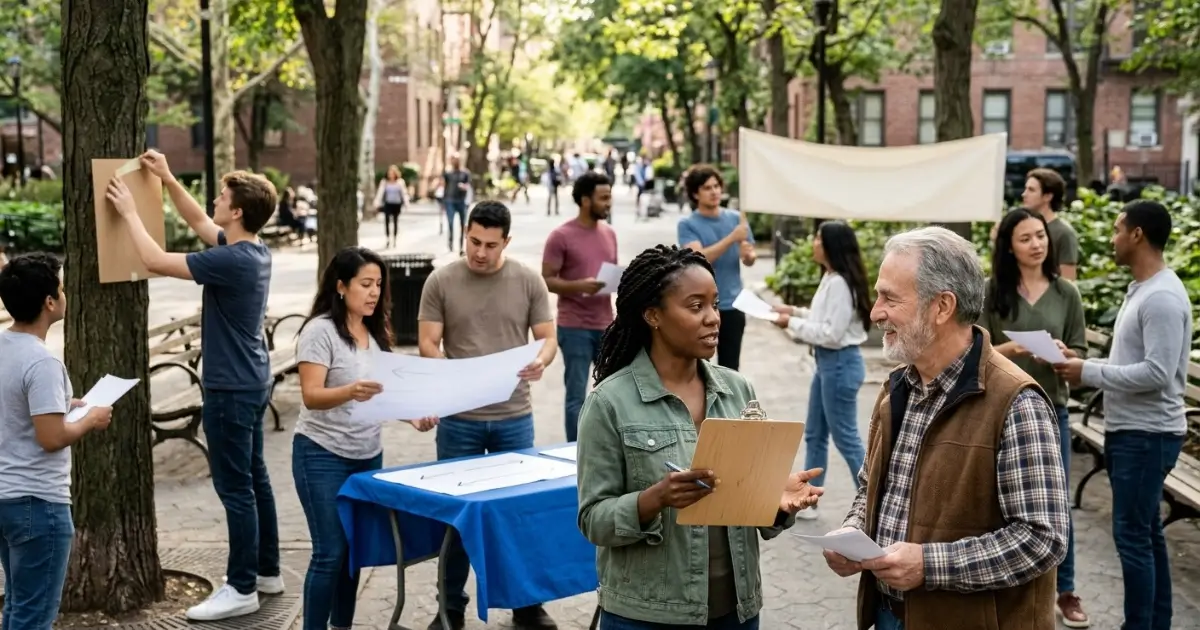
There is a version of political organizing that looks impressive and produces nothing- a large social media following, thousands of petition signatures, a packed launch event, and then quietly disappears when the moment of actual political pressure arrives and nobody shows up. Genuine grassroots political organizing looks different. It is slower to build, harder to measure in the early stages, and exponentially more powerful when it’s working correctly because it’s built on community trust rather than campaign infrastructure.
In this post, I’ll break down what genuine grassroots political organizing requires, covering the community trust that is the prerequisite for everything else, the specific asks that convert awareness into action, the digital tools that scale organizing without losing the human element, and the sustained presence that keeps a base mobilized between the high-intensity moments.
Community Trust Is The Prerequisite
Political organization on the grassroots level is built on borrowed credibility, a national platform, a celebrity endorsement, an outside organization parachuting in, and is fundamentally fragile. The most durable organizing operations are built on local trust: community members who know and believe the voices they’re hearing because those voices have been present in their specific community long before the campaign needed them. Building that trust cannot be rushed, and it cannot be substituted for with money or platform size.
The Specific Ask Converts Awareness Into Action
In political organizing on the grassroots level, the moment of conversion from passive awareness to active participation is almost always triggered by a specific, accessible ask. ‘Sign up to knock on doors in your zip code this Saturday.’ ‘Bring two friends to the town hall.’ ‘Call this number and read these talking points.’ The more specific and the more achievable the ask, the higher the conversion rate. Vague inspiration produces vague results. Specific asks produce specific participants.
Digital Tools That Scale Without Losing The Human Element
Effective political organization on the grassroots level uses digital tools to coordinate the efforts of many without turning organizing into automation. Peer-to-peer texting, digital phone banking, volunteer coordination platforms, and social media group organizing all allow a small core team to manage a far larger base. The critical discipline is keeping the human relationship at the center of each tool. Every text message should feel personal, every phone bank call should feel like a genuine conversation, every digital group should feel like a real community.
Sustain The Presence Between The Major Moments
The most common failure in grassroots political organizing is the launch problem: a big burst of energy, a lot of initial sign-ups, and then a gradual drift as the asks get further apart and the urgency fades. The organizations that sustain their base do it through regular, low-friction touchpoints. A Weekly email, a consistent social media presence, and a monthly volunteer meeting keep the community engaged between the moments when the stakes are highest.
Final Note
Grassroots political organizing is a long-game discipline built on community trust, specific asks, human-centered digital tools, and sustained presence. There are no shortcuts to it, and the organizations that refuse to look for shortcuts are the ones whose bases show up when the political moment demands action.
