Blogs
Grassroots Digital Organizing Strategy For Real Action Today

Let me tell you something that the political establishment still hasn’t fully internalized: the most powerful organizing in America right now isn’t happening in party offices or on cable news. It’s happening in comment sections, group chats, Facebook communities, and TikTok threads. Real people, fired up about real issues, are building real political power from the bottom up. And if your campaign or advocacy organization isn’t leveraging a grassroots digital organizing strategy, you are leaving that power on the table.
I didn’t build Call to Activism from the inside of a political machine. I built it because I saw the gap between what was happening in American politics and what everyday people actually understood and cared about. Our grassroots digital organizing strategy was never about going viral for its own sake. It was about turning online engagement into offline action, into votes, into volunteers, into donations, into the kind of authentic political pressure that actually moves politicians.
The Foundation: Community Before Content
Most people get grassroots digital organizing backward. They think you start with content, create something great, go viral, watch the movement build itself. That’s not how it works. The real foundation of any effective grassroots digital organizing strategy is community. Community comes first, content serves the community, and together they generate the actions you actually need.
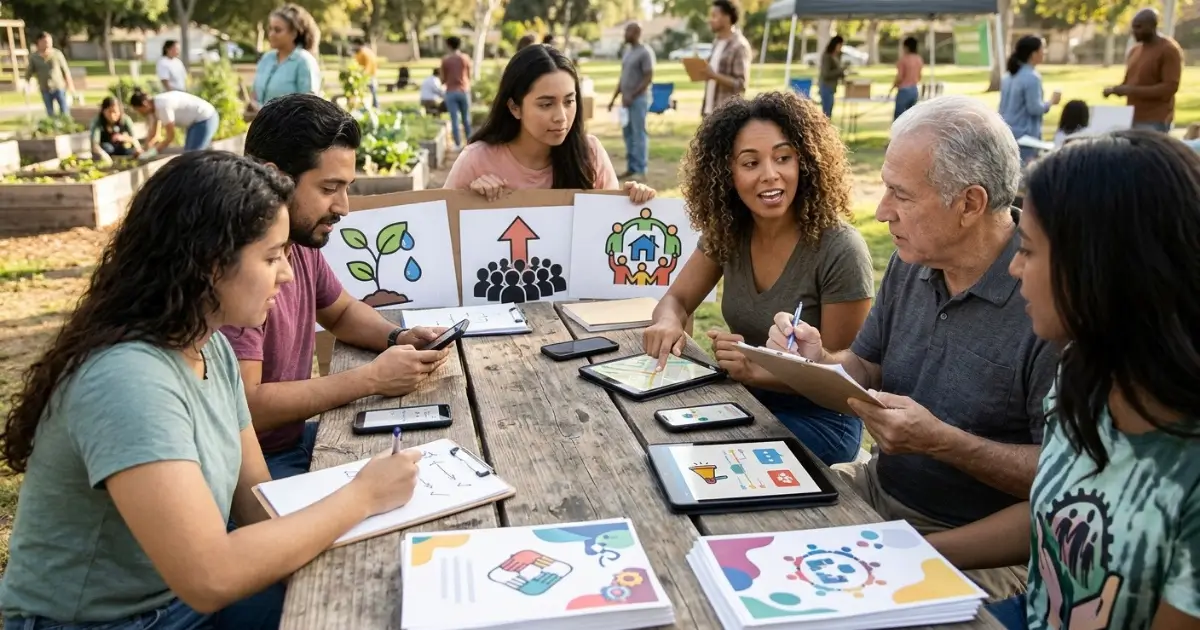
Building community online means creating spaces where people feel like they belong to something real. That might be a Facebook group for your local district, a Discord server for your volunteer base, a Substack newsletter that makes readers feel part of an ongoing conversation, or a text banking list where people know they’ll receive substantive information and real calls to action. The platform matters less than the culture you build on top of it. Communities that feel genuinely participatory, where members’ voices actually shape the direction of the organization, are the ones that convert engagement into activism.
Recruiting and Converting Followers Into Organizers
There’s a huge difference between a follower and an organizer. A follower consumes your content. An organizer produces action on your behalf. A truly effective grassroots digital organizing strategy has a clear pathway for moving people from one to the other, and that pathway needs to be as simple and accessible as possible.
The conversion funnel looks something like this: a person discovers your content, finds it resonant, and follows your account. You then give them a low-barrier action to take, signing a petition, sharing a post, joining a newsletter. You follow that with a slightly more substantial action: attending a virtual event, participating in a phone bank training, joining a local chapter group. Eventually, you invite them to lead something themselves, host a house meeting, recruit five friends, run a county-level chapter. Each step is a commitment deepening that transforms passive supporters into active co-creators of the movement.
Using Digital Tools for Ground-Level Mobilization
A modern grassroots digital organizing strategy leverages a specific toolkit of platforms and technologies for ground-level mobilization. Text message campaigns through platforms like Hustle or ThruText allow you to reach supporters directly with personalized messages at scale. Peer-to-peer texting is particularly powerful because it feels human, not automated, and the response rates are dramatically higher than email.
Email remains the most reliable channel for in-depth communication, action alerts, and fundraising asks. But it has to be earned. People don’t give their email address to campaigns they don’t trust, which is why community building has to come before email list building. Social media, particularly Facebook events and Instagram Stories, is powerful for rapid mobilization around specific actions with a clear time component: phone bank sessions, voter registration drives, town hall meetings, and rally promotion.
Measuring What Actually Matters
In a grassroots digital organizing strategy, the metrics that matter are not impressions or reach or follower counts. Those are ego metrics. The metrics that build political power are: volunteer sign-ups, petition signers converted to donors, doors knocked per organizer per week, phone calls made, and ultimately, turnout on election day. Build your measurement framework around the actions you need people to take, not the attention you need people to give.
Final Note
A grassroots digital organizing strategy, done right, is the most democratizing force in modern politics. It gives ordinary people the tools to build extraordinary political power. It shifts the balance away from big donors and political machines and back toward the communities that democracy is actually supposed to serve.
That’s what I’ve been building with Call to Activism for years, a model that takes digital reach and turns it into real-world impact. The tools are available to every campaign, every advocacy organization, every motivated person who wants to make their community better. The question is whether you’ll build the system to use them.
