Blogs
Political Content Calendar Strategy For Campaign News Cycles

I always say: campaigns that fail at content don’t fail because they ran out of things to say. They fail because they had no system for saying things at the right time. And in modern political campaigning, timing is everything. A political content calendar strategy is the backbone of any serious digital campaign operation, the thing that keeps your messaging disciplined, your team coordinated, and your content showing up exactly when your audience needs to hear it.
After building Call to Activism into one of the most-viewed progressive platforms in America, with content reaching over 4 billion views annually, I can tell you that we didn’t get there by winging it. There was always a system. There was always a plan. And that plan was built around a content calendar that balanced predictable campaign moments with the flexibility to pivot when the news demanded it.
What a Political Content Calendar Actually Is
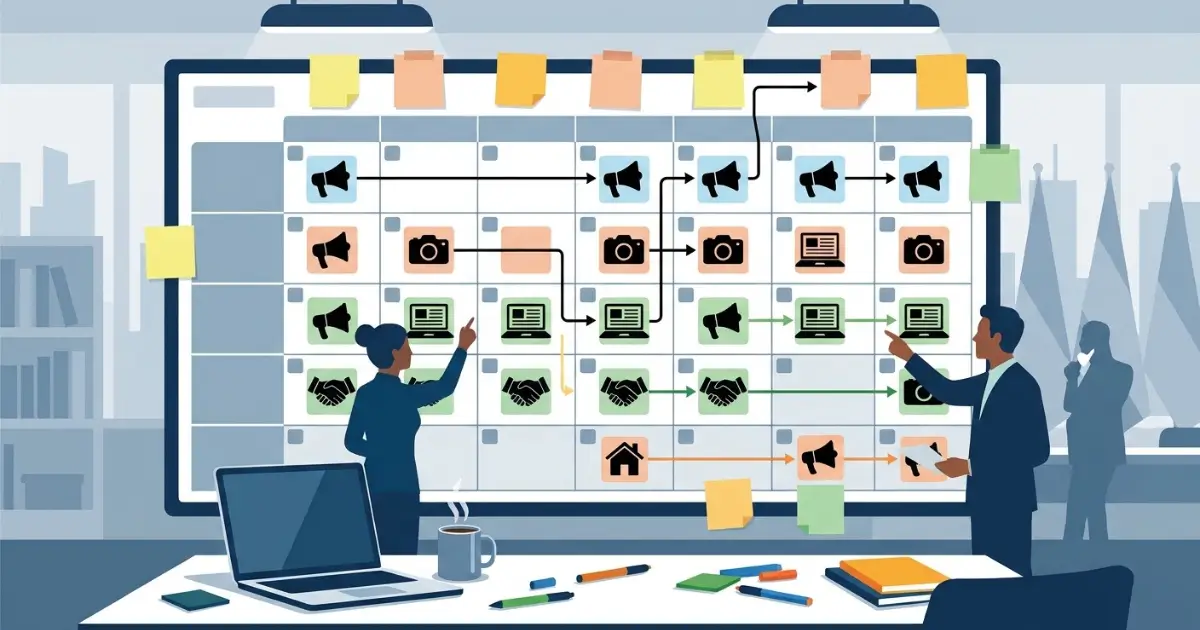
A political content calendar strategy is a structured, rolling schedule of planned content across all your campaign’s digital channels. It maps out, in advance, what content will be published, on which platform, on which date, and around which theme or messaging priority. For a political campaign, this typically operates on at least three tracks: planned proactive content tied to the campaign’s own agenda, reactive content windows reserved for responding to the news cycle, and event-based content around debates, town halls, fundraisers, and key legislative moments.
The goal isn’t rigidity. The goal is intentionality. When you know what you’re publishing three weeks from now, you can allocate resources, pre-produce assets, and make sure your messaging builds on itself coherently over time. Without a calendar, campaigns often find themselves either going dark for days at a time or posting random, disconnected content that doesn’t advance any coherent narrative.
Mapping Your Content to the News Cycle
One of the most important skills in executing a political content calendar strategy is understanding the rhythm of the political news cycle and mapping your content to it. Monday is typically a slow news day, a great time for your campaign to generate its own headlines with proactive announcements, policy rollouts, or coalition endorsements. Tuesday through Thursday tend to be peak news days, when major legislative votes, committee hearings, and political events cluster. These days demand both reactive content capability and pre-planned content that can anchor your message while the news swirls.
Fridays are the traditional ‘take out the trash’ day in politics, when campaigns and politicians release bad news hoping it gets buried in the weekend cycle. Your political content calendar strategy should anticipate this and have content ready that either responds to Friday news dumps or takes advantage of the reduced media competition to amplify your own positive messaging. Weekends, increasingly, are when social media engagement actually peaks for many demographics, making Saturday and Sunday content underutilized opportunities for most campaigns.
Building Your Monthly and Weekly Framework
At the monthly level, your political content calendar strategy should identify the major themes and milestones for that month: any primaries, key votes, major policy announcements, anniversaries of important moments, or opponent campaign events that will shape the news environment. At the weekly level, you’re translating those themes into specific post types, platform assignments, and messaging priorities.
A typical week for a well-organized campaign digital team might look like this: Monday opens with a values-forward post explaining the week’s messaging theme. Tuesday and Wednesday deploy policy content and testimonials from constituents. Thursday is for engagement-driven content like polls, question prompts, or shareable graphics. Friday includes a positive campaign highlight to end the week on a strong note, and the weekend features a more personal, behind-the-scenes look at the candidate or campaign. That structure, repeated consistently with variation in topic and format, trains your audience to expect content from you and builds the kind of habitual engagement that drives organic reach.
Leaving Room for the Unexpected
Here’s the tension every political content calendar strategy has to manage: the news cycle doesn’t care about your plan. Breaking news, opponent attacks, and viral moments can completely reshape your content priorities in minutes. A good calendar accounts for this by leaving roughly twenty to thirty percent of your weekly content slots intentionally empty, reserved for reactive content.
The most sophisticated campaigns I’ve worked with treat these open slots as strategic reserves. They’re not empty because the team ran out of ideas. They’re empty by design, ready to be filled the moment a news story demands a response. This is the balance that keeps a campaign both organized and agile, structured enough to maintain consistent messaging, flexible enough to win the moment when it presents itself.
Final Note
A political content calendar strategy is the difference between a campaign that communicates with purpose and one that posts randomly and hopes something sticks. Build your framework, map it to the news cycle, leave room for the unexpected, and hold your team accountable to the plan you’ve built together.
At Call to Activism, our content calendar has been the quiet engine behind every viral moment, every successful interview, every campaign we’ve helped guide. The calendar isn’t glamorous. But it’s the thing that makes everything else possible.
