
Blogs
Building an Effective Video Strategy for Political Campaigns

Every political campaign I’ve worked with or studied closely in recent years has one thing in common among the ones that won: they figured out video before their opponents did. Not just producing videos – anyone can make a video – but building a real, disciplined political campaign video strategy that turned visual content into a voter contact operation. The campaigns that treat video as an afterthought are the ones playing catch-up through the entire race. The ones that build the infrastructure early are the ones writing the victory speech.
At Call to Activism, video has been central to everything we’ve built. Our content has reached over 4 billion views annually, and a significant portion of that comes from knowing exactly how to structure a campaign video strategy that works across platforms, formats, and news cycles. What I’ve learned from that experience is directly applicable to campaigns of any size – from a state legislative race to a national campaign – because the underlying principles are the same even when the scale is different.
Short-Form Vs. Long-Form: Knowing What Goes Where
The first thing a campaign video strategy has to establish is the right format for each platform and each purpose. Short-form video – clips under ninety seconds, often much shorter – is where organic discovery happens. TikTok, Instagram Reels, and YouTube Shorts are where voters who aren’t already following your campaign can find you through the algorithm. These platforms reward content that earns genuine engagement quickly, which means your short-form video needs to capture attention in the first three seconds and deliver a complete, emotionally resonant moment before the viewer’s thumb moves.
Long-form video – full interviews, policy explainers, town hall recordings, documentary-style candidate profiles – builds the deeper trust that converts a casual viewer into a committed supporter. YouTube is the home of long-form campaign content, and it has the additional benefit of being indexed by Google search, making it a permanently discoverable asset that continues to reach voters long after the original posting date. A strong political campaign video strategy uses both formats and understands that they serve different stages of the voter journey.
The Anatomy Of A Campaign Video That Converts
Regardless of format, the campaign videos that actually move voters share a few characteristics. They feature the candidate or a real constituent speaking naturally – not reading from a teleprompter, not reciting rehearsed talking points, but actually talking like a human being. They tell a story with a clear protagonist, a clear problem, and a clear sense of what’s at stake. And they end with a specific, simple call to action that tells the viewer exactly what you want them to do next.
The production quality question is less important than most campaigns think. Research consistently shows that voters are more persuaded by authentic, slightly imperfect video than by overly polished content that feels corporate or managed. Your campaign video strategy should prioritize authenticity over production value every single time – a candidate talking to camera on their phone in a meaningful setting will outperform a slick ad produced in a studio with no human warmth.
Extracting Maximum Content From Every Campaign Event
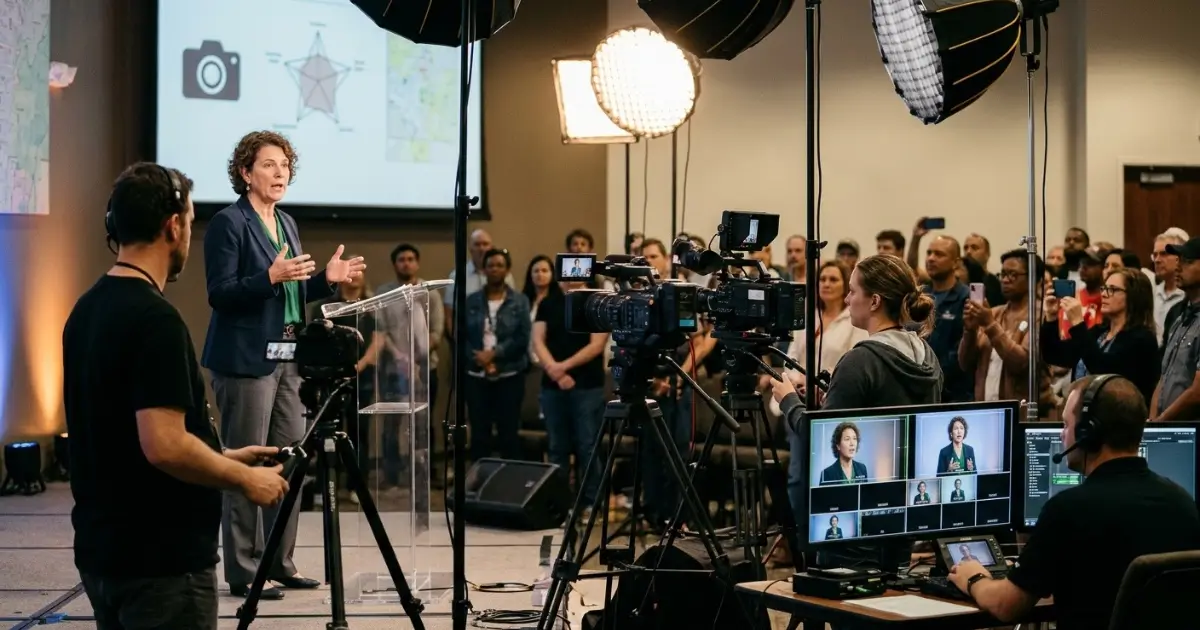
Here’s the operational secret that separates campaigns with strong political campaign video strategies from the ones that are always scrambling for content: you don’t need to produce new content every day. You need to extract maximum value from every event, appearance, and interaction your campaign generates. A single town hall event, properly filmed and edited, can yield twenty individual short-form clips – each highlighting a different question, a different moment, a different issue – spread across platforms over two to three weeks.
Assign one team member at every campaign event specifically to clip identification. Their job is not to participate in the event but to timestamp moments that are worth cutting into video. That discipline, applied consistently, transforms your campaign’s existing activities into a continuous content production pipeline with zero additional event-creation cost.
Final Note
A political campaign video strategy is not a production project – it’s a voter contact infrastructure that happens to use video as its medium. Build it with intentionality, optimize it for the platforms where your voters are, and extract maximum content from every moment your campaign generates. The campaigns that do this right are the ones that show up in voters’ feeds, build genuine emotional connection, and earn the engagement that converts to votes on election day. I’ve seen it work at scale. It can work for your campaign too.
