
Blogs
How Political Campaigns Can Use Email Marketing Effectively

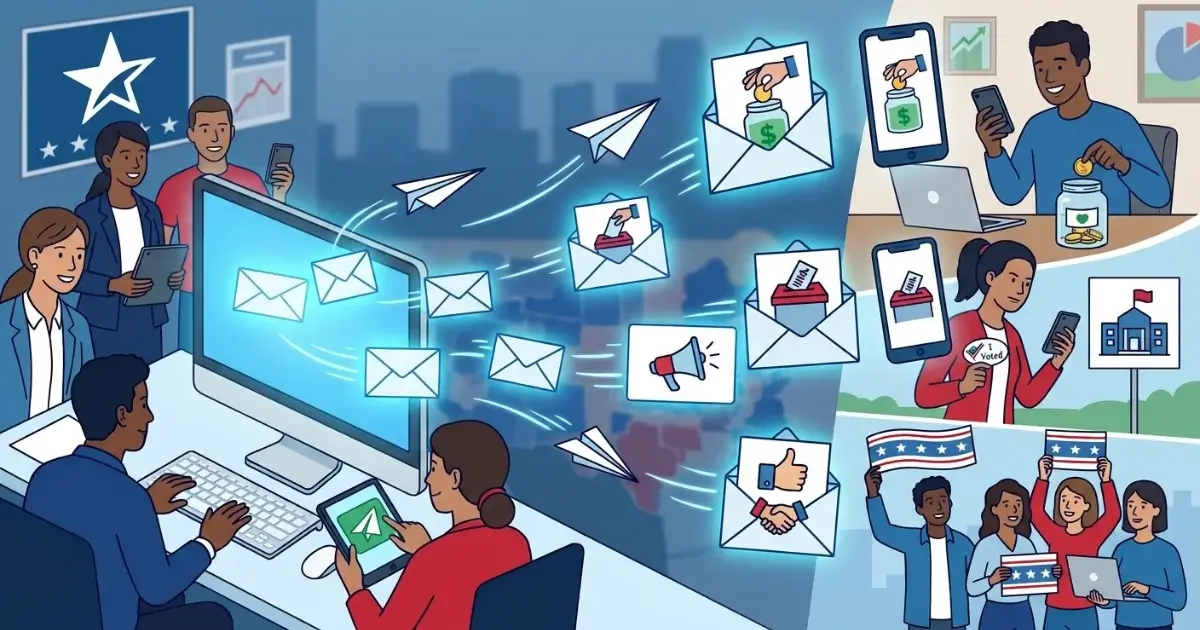
If there’s one thing I’ve learned from years of digital advocacy and campaign strategy, it’s that the flashiest platform isn’t always the most powerful one. While everybody is obsessing over the latest algorithm, the campaigns that are actually winning are quietly crushing it in the inbox. Political campaign email marketing is hands-down one of the most underutilized – and most impactful – tools available to any campaign, from a school board race to a run for Congress. And if you’re not treating your email list like the strategic asset it is, you are leaving real money, real volunteers, and real votes on the table.
I built Call to Activism into one of the most-viewed progressive platforms in America, and through that work I can tell you: no platform reaches people the way email does. Social media algorithms decide whether your followers see your post. Email arrives. That fundamental difference in control and reach is why email marketing needs to be at the core of your digital strategy – not an afterthought you bolt on when someone reminds you.
Why Email Outperforms Every Other Digital Channel For Campaigns
Let’s start with the basics. The average political campaign email open rate sits between 25 and 40 percent for well-managed lists. Organic social media reach? Often as low as two to five percent of your total followers. When you send an email, the vast majority of your list, at minimum, sees your subject line – which means they’re aware you exist and they’re making an active choice about whether to engage. That’s not something any social media platform can promise you. Email marketing gives you direct, unfiltered access to people who have already said, ‘Yes, I want to hear from you.’
Beyond reach, email is the primary engine of political fundraising. Virtually every major political campaign’s small-dollar fundraising operation runs through email. The campaigns that struggle financially in the final weeks before an election are almost always the ones with weak, neglected email lists. You cannot build a robust digital fundraising operation on social media alone – email is where the conversion happens.
Building A List That Actually Converts
Political campaign email marketing starts with list growth, and list growth starts with a compelling reason for someone to hand over their email address. ‘Subscribe to our newsletter’ is not a reason. A clear, immediate value exchange – a voter guide to the issues your community cares about, early access to campaign news, a personal message from the candidate explaining why they’re running – is a reason. Whatever your lead magnet, it must answer the question your potential subscriber is silently asking: ‘What’s in it for me?’
Once someone subscribes, your onboarding sequence is your most important email moment. The first three emails a new subscriber receives determine whether they stay engaged or go permanently dormant. Use your welcome email to deliver on your promise immediately, introduce the candidate in a genuine and human way, and give the subscriber a single, low-friction action to take: follow on social media, answer a quick question about the issue they care most about, or share the sign-up link with a friend. That early activation is what builds a live list out of what would otherwise become dead weight.
What To Send And How Often
The right cadence for email marketing depends on where you are in the campaign cycle. During an active campaign, two to four emails per week is defensible and often necessary – especially in the final weeks before election day when urgency is real, and your list expects to hear from you. Outside of active campaign periods, one high-quality weekly email maintains list warmth without training subscribers to ignore you.
Your content should rotate through three types: value emails that provide genuine political information or insider campaign news; story emails that feature the candidate, constituent testimonials, or behind-the-scenes campaign moments; and action emails that ask for something specific – a donation, a volunteer shift, a social share, a voter registration reminder. When every email is an ask, people unsubscribe. When every email is information with no call to action, you’re leaving conversions unrealized. The sweet spot keeps your list engaged and converting throughout the campaign.
Subject Lines: The Most Important Real Estate In Your Campaign
Your subject line is what determines whether email marketing actually reaches people – because even a delivered email means nothing if it’s never opened. The best campaign subject lines are short, specific, and create either a story that makes the reader curious or a knowledge gap they need to close. ‘What happened at yesterday’s town hall’ will dramatically outperform ‘Campaign Update – Month Edition’ every single time. Test your subject lines before sending to your full list – most email platforms allow A/B split testing, and even small improvements in open rate compound significantly over an entire campaign.
Final Note
Political campaign email marketing is the long game – and the long game is how elections get won. Build your list early, treat every subscriber as the irreplaceable asset they are, and send content that earns attention rather than demands it. If you build it with discipline and maintain it with care, your email list will be the most reliable weapon in your campaign’s digital arsenal on election day. At Call to Activism, email has always been at the center of everything we build. It should be at the center of yours too.
