
Blogs
Political Media Training: Preparing Candidates for Interviews

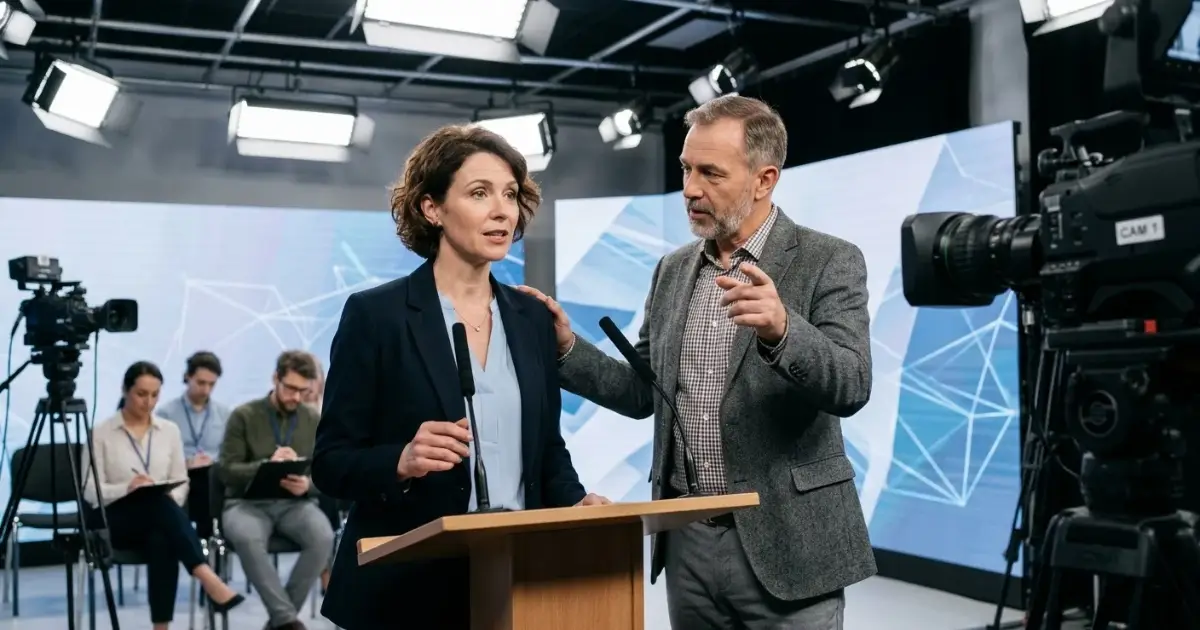
I have sat across from some of the most powerful voices in American politics and asked them the hardest questions I could. As host of The Daily Mic Drop, I’ve seen candidates at every level either rise to the moment or crumble under basic follow-up questions because nobody prepared them for what it actually feels like to be interviewed under real pressure. Political campaign media training is the preparation that separates candidates who leave an interview with their narrative intact from the ones who hand their opponent a clip that becomes the defining moment of the race.
Let me be honest about something: most candidates dramatically underestimate how difficult it is to perform well in a media environment that is moving faster, has shorter patience for non-answers, and is more unforgiving than at any point in political history. Campaign media training is not about spin or evasion. It’s about giving candidates the tools to communicate their message clearly, authentically, and effectively under pressure – because the candidate who can do that consistently wins the communications battle even when the interviewer is hostile or the question is difficult.
What Effective Political Campaign Media Training Covers
Comprehensive campaign media training addresses several distinct skills. The first is message discipline: the ability to return to your core message from any question, including hostile or off-topic ones. This is not about dodging questions – it’s about always connecting what you’re saying back to what matters most to your campaign and your voters. Candidates who lack message discipline get pulled into the interview’s frame rather than their own, and they consistently lose those exchanges.
The second is bridging: the specific verbal technique for transitioning from an interviewer’s question to your intended message. ‘That’s an important question, and what I’d really want your viewers to understand is…’ is a bridge. ‘I can speak to that, but first let me tell you what I’ve actually been hearing from voters in this district…’ is a bridge. Bridges must be practiced until they feel natural, because under the stress of a live interview with cameras and a skeptical interviewer, candidates default to whatever they’ve rehearsed most.
Camera And Non-Verbal Presence
Political campaign media training must address non-verbal communication, because voters form significant impressions of candidates based not on what they say but on how they look while saying it. Eye contact, posture, pace of speech, the use of pauses, facial expression – all of these communicate either confidence and credibility or uncertainty and evasiveness. Research consistently shows that voters watching with the sound off can identify whether a candidate is winning or losing a media exchange based on visual cues alone.
Training for camera presence requires actual video recording. You cannot improve your on-camera performance without watching yourself on camera, uncomfortable as that is. Every media training session should include at least one full mock interview, recorded and reviewed with the candidate. The first time a candidate watches themselves on video is almost always a wake-up call – habits that feel perfectly normal in conversation look very different on screen.
Preparing For Hostile Questions
The most valuable portion of any media training program is practice with genuinely hostile questions. Not friendly softballs – real, difficult, adversarial questions drawn from actual opposition research about the candidate’s record, inconsistencies in their messaging, or vulnerabilities that journalists are likely to pursue. The goal is not to prepare the candidate to avoid these questions but to ensure they’ve faced them in a low-stakes environment where the cost of stumbling is a learning moment rather than a campaign-damaging clip.
After practicing a difficult question multiple times, candidates typically develop confidence that comes from realizing they can handle it – and that confidence reads differently on camera than the anxiety of facing something unexpected for the first time live.
Final Note
Political campaign media training is one of the highest-return investments a campaign can make. A candidate who communicates clearly, handles pressure well, and controls their message in every media environment is a candidate who consistently wins the narratives that shape voter perception. Whether facing a local TV interview or a nationally televised debate, the candidates who’ve done the work in media training are the ones who make it look easy when it absolutely isn’t. Do the work. The camera will notice.
