
Blogs
The Role Of Social Media In Modern Politics

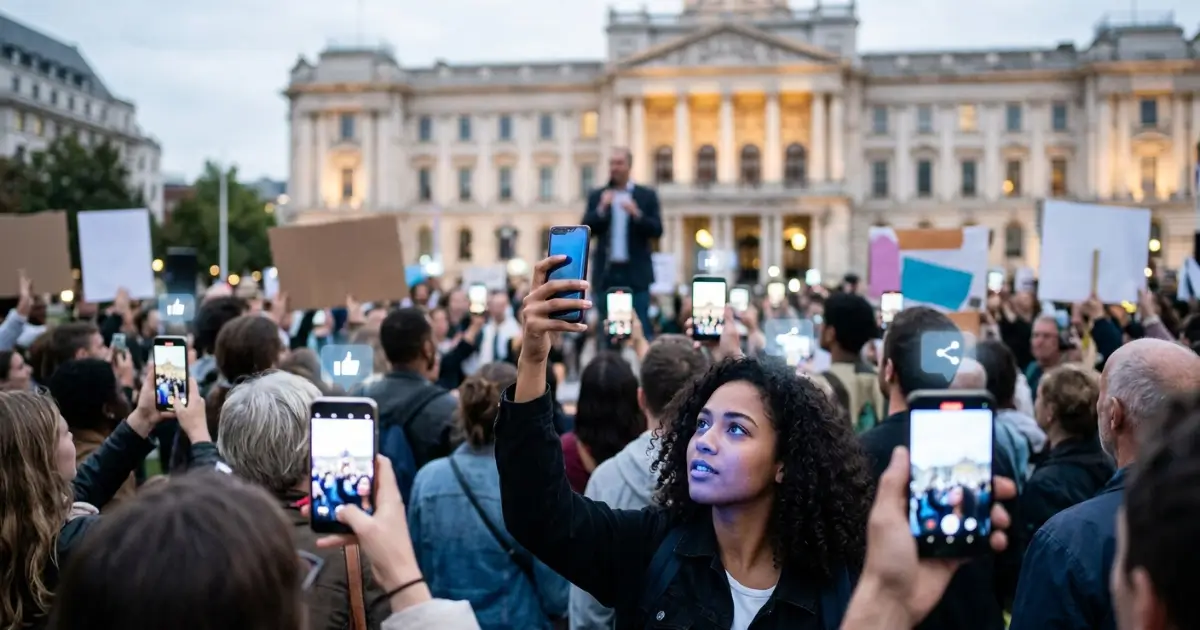
A senator says something in a hearing, and within minutes a clip has reached a million people, been stripped of context by a dozen different accounts, and shaped how millions understand a political moment the senator never fully controlled. The role of social media in modern politics is not a peripheral story anymore. It is the central infrastructure through which most political reality gets formed, whether we’re comfortable with that reality or not, and whether our institutions have caught up to it or not.
In this post, I want to walk through social media’s role in modern politics as I’ve experienced it directly, the speed that has genuinely democratized political voice, the disinformation risk that speed creates, and the disintermediation of traditional political authority that has changed who actually shapes the narrative on any given day. All three of these forces are operating simultaneously, and understanding them together is the only way to make real sense of the current moment.
Speed Is Simultaneously the Asset and the Danger
The role of social media in modern politics is defined first by speed. Stories that once took days to surface now travel in minutes. That’s genuinely democratizing. A citizen with documented evidence can now reach an audience a newspaper editor once controlled exclusively. But it also means the correction almost never travels as fast as the original claim. Both truths are real at once, and pretending otherwise misses what’s actually happening in real time.
I’ve watched false claims reach millions before a single fact-check catches up, which is exactly why the standard I hold myself to, verify before you publish, matters more now than it ever did in a slower, more deliberate media environment where a story might sit with an editor overnight.
Political Authority No Longer Needs an Institution
One of the most significant parts of social media and modern politics is disintermediation, the collapse of the gatekeepers who once decided what counted as serious political discourse. A citizen with a phone and documented evidence can now reach an audience that rivals a congressional press office, without needing a press badge, a producer, or an editor’s approval to publish what they’ve found.
This shift is genuinely democratizing in important ways, but it also means that the responsibility for accuracy has shifted from institutions with editorial standards onto millions of individuals who may or may not have any standards of their own to hold themselves to.
Echo Chambers Are the Structural Cost
The role of social media in modern politics also includes its most damaging feature: algorithmically curated echo chambers that show each user more of what they already believe. Citizens increasingly live in separate, self-consistent political realities, and that fragmentation is the single hardest problem this new environment has created, harder, in some ways, than misinformation itself, because it’s largely invisible to the people experiencing it.
Fighting this requires deliberately producing content that engages people outside your existing audience, rather than simply serving the algorithm’s preference for narrower and narrower engagement that keeps everyone comfortably inside their own bubble.
Final Note
The role of social media in modern politics is neither purely liberating nor purely destructive. It’s both, simultaneously, and understanding that duality is the only way to navigate it honestly. The citizens who do this best are the ones who actively resist the algorithm’s incentives rather than simply accepting them as inevitable and unchangeable.
