Blogs
How Social Media Is Changing Political Discourse

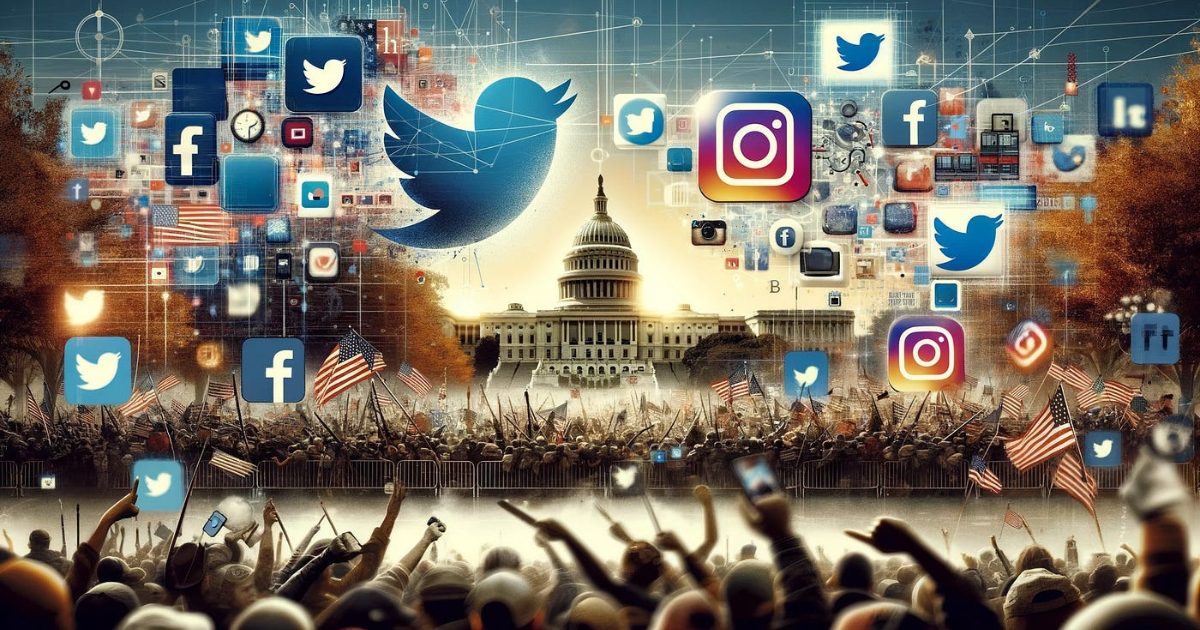
The speed at which political discourse now moves is categorically different from anything in democratic history. A senator can make a statement in a committee hearing, and within minutes, a clip of that statement has been viewed by a million people, contextualized by a hundred commentators, and embedded into a hundred thousand conversations, none of which the senator controls or even knows about. How social media is changing political discourse is not a slow or subtle phenomenon. It is a structural transformation of the environment in which democratic debate happens, and it is happening faster than our political institutions can adapt to it.
I have been operating in this environment since 2017, building Call to Activism into a platform that now reaches billions of views annually. In this piece, I’m going to walk through how social media is altering political discourse, including what has genuinely improved, what has gotten dramatically worse, how speed and authenticity trade off against accuracy and depth, and what any informed citizen needs to understand about the information environment they’re living in.
Speed as a Feature and a Bug
The speed of social media political discourse is simultaneously its greatest democratic asset and its most dangerous liability. The asset: stories that once took days to reach the public now travel in minutes, accountability moments are captured and distributed before political actors can control the narrative, and citizens can respond to political developments in real time. The liability: the speed that makes social media politically powerful also makes it structurally hostile to verification. How social media is changing political discourse includes the uncomfortable reality that the correction almost never travels as fast as the original claim.
Disintermediation of Political Authority
Social media has effectively disintermediated traditional political authority, removing the institutional gatekeepers who once determined what counted as serious political discourse. This is how social media is altering political discourse at its most fundamental level: political power no longer automatically amplifies its own voice. A citizen with a phone and evidence can reach an audience that rivals a congressional press office. That is genuinely democratizing and genuinely chaotic.
Echo Chambers and the Fragmentation of Political Reality
The most structurally damaging way that social media changes political discourse operates through is the algorithmic creation of political echo chambers. When platforms serve each user a personalized feed optimized for engagement, and when outrage is the most reliable engagement driver, the result is a citizenry that lives in increasingly separate political realities, each of which feels completely self-consistent because it has been algorithmically curated to remove any friction.
Final Note
How social media is changing political discourse is the story of a tool that is simultaneously the most democratizing and the most destabilizing force in modern political communication. The citizens who navigate it most effectively are the ones who understand its structural incentives and actively resist them, seeking out friction, verifying claims before sharing, and refusing to let the algorithm be their only editor.
